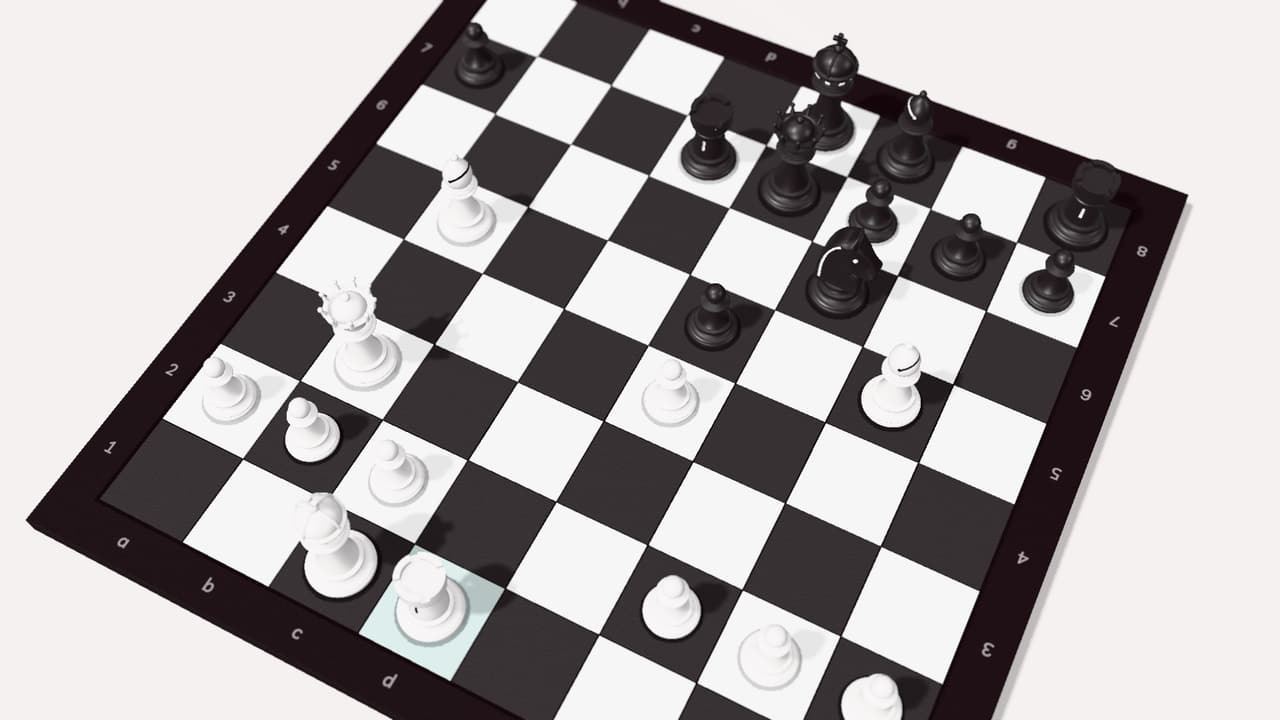
Most club players mean to go over their games and then do not. The season is busy, the scoresheet goes in a drawer, and by the time there is an evening free the game is a blur. This is a routine that survives a busy season, because it asks for very little: one lesson from each game.
Why only one
Every game has a dozen things you could learn from it. Trying to take all of them means remembering none. One lesson, written as a sentence, is small enough to keep and specific enough to use next time. After a season you have twenty or thirty of them, and they will be about your chess, not anyone else's.
Straight after the game: notes first
The best time to review is within a few hours, while you remember what you were thinking. Before you look at anything else, go through the game on your own and write down:
- The moment you felt the game change, for better or worse.
- The moves you considered and rejected at that moment, and why.
- Where you spent your time, and where you wish you had spent it.
If your opponent is willing, go over it together. They saw things you did not, and they will often tell you what they were afraid of.
The next day: the engine second
Then switch the engine on. In Plyfolio, review uses Arasan, a strong chess engine, on your phone after the game, and marks the moments where the evaluation moved most. Compare those moments with your own notes. Where you and the engine agree on the turning point, look at why. Where you missed one entirely, that is often the lesson.
Be wary of the engine's exact numbers. A swing from +0.3 to +0.9 in a position you would never have understood is not much of a lesson. A swing from equal to lost after a move you played quickly is.
Write one sentence
Now write the lesson as one sentence that you could act on in your next game. "Play better in the middlegame" is not one. These are:
- When my opponent castles long, count the pawns in front of each king before I attack.
- With under ten minutes left, I check every capture my opponent has before I move.
- In this opening, ...d5 only works once the knight is on f6.
Keep them where you will see them
A lesson is only useful if you read it again. Put it in the game's notes so it stays with the position it came from, and bookmark that position. Before a match, read the last few lessons. Before a congress, read them all.
When there is no time
Some weeks there is no evening free at all. Then do the smallest part: write one line in the game's notes on the night, the moment you think it turned, and leave the rest. That line is enough to find the lesson later, and it is the part you cannot recover once the game has faded.
A season later
At the end of the season, read every sentence in one go. You will find that three or four of them are really the same lesson, written in different games. Those are the ones to work on over the summer.
Written by Remiam. More from Remiam